Helping Your Pet Stay Calm During New Year’s Celebrations
New Year’s celebrations can be an exciting time for us humans, but for our pets, the noise, unfamiliar people, and disruptions in routine can cause significant stress. Understanding why pets feel anxious and taking proactive steps to ease their discomfort can help ensure the festivities are enjoyable for everyone, including your furry family members.
Why Are Pets Stressed During New Year’s?
Why Are Pets Stressed During New Year’s?
- Fireworks and Loud Noises The sudden, loud sounds of fireworks are one of the most common sources of stress for pets. Studies have shown that dogs, for example, hear sounds at frequencies almost twice as high as humans and at volumes up to four times greater (Levine et al., 2007). This heightened sensitivity makes loud noises like fireworks especially overwhelming.
- Changes in Routine Pets thrive on routine, and the unpredictability of holiday parties, including altered feeding and walking schedules, can unsettle them. Cats, in particular, may feel uneasy with unfamiliar guests in their territory.
- Crowded Spaces For pets who are shy or territorial, a house full of strangers can be intimidating. According to Mills and Levine (2013), social stress in pets often manifests in pacing, hiding, or even aggressive behavior.


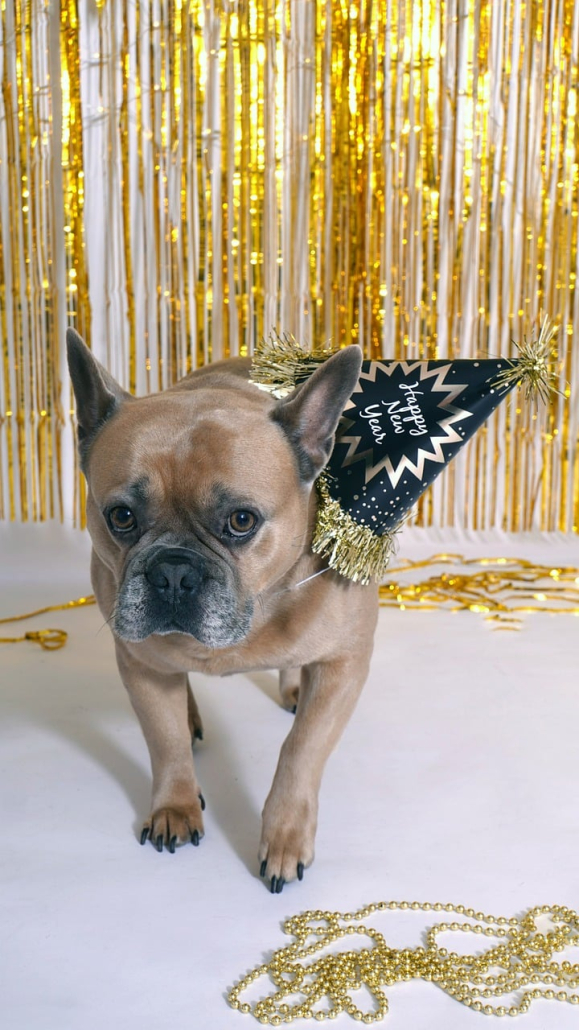
Signs Your Pet May Be Stressed
- Dogs: Hiding or other avoidance behaviors (turning away, moving away), panting, trembling, whining, pacing, or excessive barking. Visual body language signals can include: pupil dilation, ears pinned back, lip licking or yawning, tail tucked or tail raised higher than normal, tense body posture.
- Cats: Hiding or withdrawing from normal social interactions, increased vocalization, reduced appetite, excessive grooming, increased aggression (hissing, growling, swatting), restlessness. Visual body language signals can include – dilated pupils, flattened ears, tail twitching or puffing up, body crouched or standing tall with back arched.
- Other Pets: Changes in eating or elimination habits, lethargy, or hyperactivity.
Recognizing these signs is the first step toward addressing your pet’s stress.


Tips to Keep Your Pet Calm
- Create a Safe Space Designate a quiet, comfortable area in your home where your pet can retreat. Include their favorite toys, blankets, and perhaps some calming music designed for pets.
- Use Calming Aids Calming aids such as pheromone diffusers (e.g., Adaptil for dogs or Feliway for cats) have been shown to reduce anxiety in pets (Frank et al., 2010). Additionally, anxiety wraps like the Thundershirt may provide comfort through gentle pressure.
- Provide Mental and Physical Stimulation Before the celebrations begin, tire out your pet with exercise or playtime. A tired pet is more likely to relax during the evening.
- Avoid Punishment If your pet displays stress-related behaviors, resist the urge to scold them. Instead, offer reassurance and redirect their focus with positive reinforcement.
- Consider Veterinary Support In severe cases of anxiety, consult your veterinarian about temporary anti-anxiety medications or supplements. A professional can guide you in choosing the best solution for your pet’s needs.
Final Thoughts
New Year’s Eve can be challenging for pets, but with preparation and understanding, you can help them feel safe and secure. By taking steps to minimize stress, you’re not only ensuring a happier pet but also strengthening the bond you share.
Future Considerations:
• Desensitize Ahead of Time:
-
- If you know fireworks are a trigger, consider gradually desensitizing your pet to the sound. Playing recordings of fireworks at low volumes and rewarding calm behavior can help reduce fear over time (Landsberg et al., 2015). Introduce your dog through gradual desensitization to sound dampening ear muffs to help decrease the intensity of the noise from fireworks displays.
- If your pet is fearful of guests and you plan to have a party, introduce your pet to a safe calm space well in advance of the New Year’s eve celebrations and teach them that spending time in this space is enjoyable.
• Contact a veterinary behaviorist if holidays are so so stressful you wish they would cease to exist so that you and your pet can have a better plan in place for next year.
Here’s to a peaceful and joyous New Year for you and your furry friends!