
Beginning with Trust:
How Cooperative Care Transforms Your Relationship With Your Pet
At Veterinary Behavior Specialties of Minnesota, we believe that animal care—whether at the clinic or at home—should be effective, compassionate, and grounded in trust. From veterinary procedures to routine husbandry tasks like nail trims, grooming, and medication, every interaction is an opportunity to reduce fear, build confidence, and strengthen the bond between pets and their people. In this first post of a new series, we’re exploring how our team partners with pet families and the broader veterinary community to improve the care experience—beginning with a foundational concept in behavior-based care: cooperative care.
What is Cooperative Care?
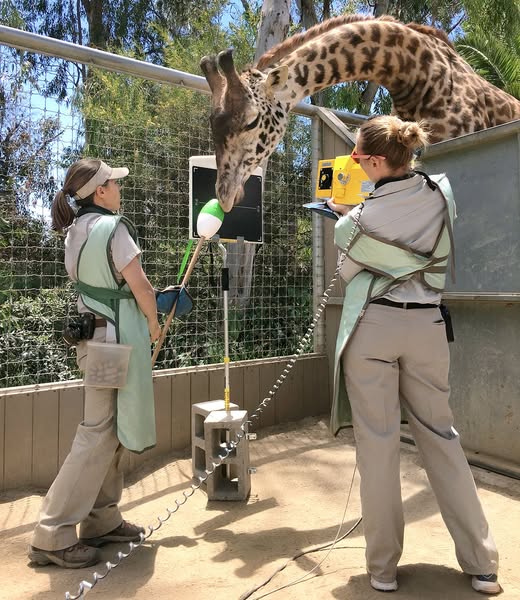
Cooperative care is a training approach that teaches animals to voluntarily participate in their own healthcare. Rather than relying on restraint or sedation for routine procedures, pets are trained—through positive reinforcement and desensitization—to remain calm and willing participants in exams, grooming, injections, blood draws, and more.
The roots of cooperative care come from the world of zoological medicine. Originally developed to help wild animals in captivity receive medical care without the need for anesthesia or force, cooperative care techniques have made it possible to collect blood samples from elephants, perform dental exams on big cats, and even administer eye drops to birds of prey—all with voluntary participation from the animals.
Now, those same principles are being used in homes and clinics to help pets feel safe and empowered during veterinary visits.
👉 Watch this example of a bobcat voluntarily participating in a vet visit:
Why Does It Matter?
Veterinary visits can be stressful for many pets, especially when they don’t understand what’s happening or feel they have no control. That fear can lead to defensive behavior, avoidance, or increased anxiety over time. Cooperative care gives pets clear communication, choice, and predictability—resulting in less stress, improved safety, and a better experience for everyone involved.
Whether your pet needs a nail trim or a more complex medical procedure, cooperative care can make it more manageable, humane, and effective.
👉 See how cooperative care helps with a common husbandry task like nail trims:
Beyond the Clinic: Cooperative Care at Home
Cooperative care isn’t just for veterinary visits—it also transforms routine husbandry at home into a bonding experience instead of a battle.
Brushing teeth, cleaning ears, applying eye drops, or giving medication can often become stressful for both pets and their people. When these tasks are rushed or forced, they can create or worsen fear-based behaviors. But with cooperative care training, pets learn that they can opt in to these experiences—and that doing so earns rewards and respect. Small, everyday interactions like these help build a foundation of confidence and predictability for pets. They learn that their voice matters, and you gain a willing partner in their care.
Staff at the Central Park Zoo was able to train their snow leopard to voluntarily present herself for eye drop application.
And a dog can be taught to rest their chin on a towel to signal readiness for an ear cleaning or eye medication.
Our Role in the Process
At Veterinary Behavior Specialties of Minnesota, we help pets and their people develop cooperative care routines tailored to each animal’s behavioral needs and medical requirements. Our board-certified veterinary behaviorists, behavior resident and certified behavior therapy trainers work closely with referring veterinarians, partnering trainers, and families to ensure pets get the care they need in a way that feels safe and respectful.
This post is just the beginning. In future entries, we’ll share how we collaborate with primary care veterinarians and specialists to support behaviorally sensitive pets, offer real case examples, and provide practical strategies for reducing stress in veterinary care—and at home.
